
Biography
I am Shenzhi Wang (王慎执 in Chinese), a Ph.D. candidate at LEAP Lab in the Department of Automation at Tsinghua University. My research focuses on post-training for foundation models, with an emphasis on reinforcement learning.
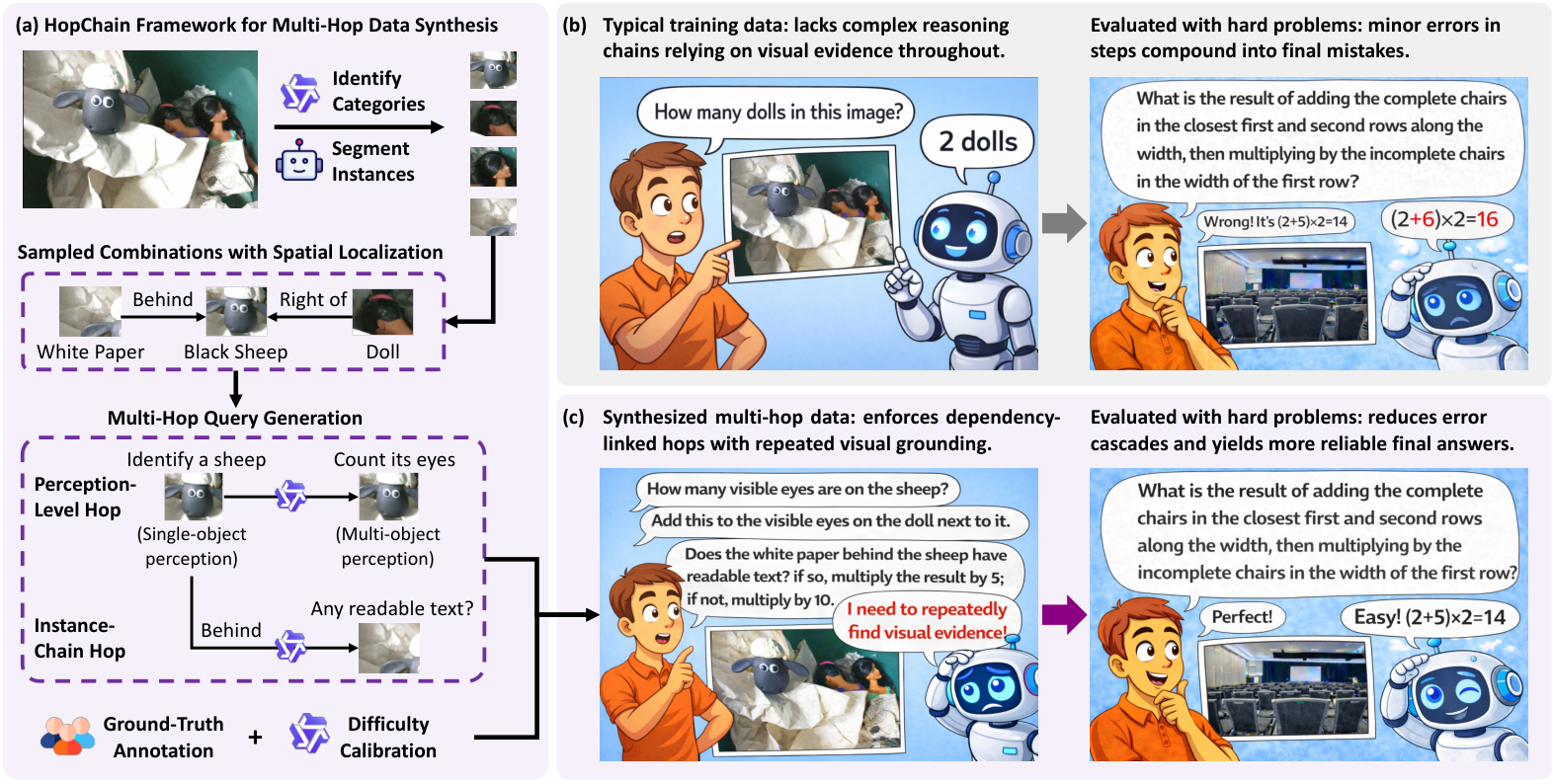
I am currently with Moonshot AI, where my recent work includes contributions to Kimi K3, focusing on scalable agentic post-training. Previously, I served as a research intern on Alibaba Qwen’s Post-training Team, where I worked on reinforcement learning, scalable post-training, and multimodal reasoning. I developed Beyond the 80/20 Rule and HopChain, with HopChain serving as one of Qwen3.5’s vision-language RLVR training tasks.
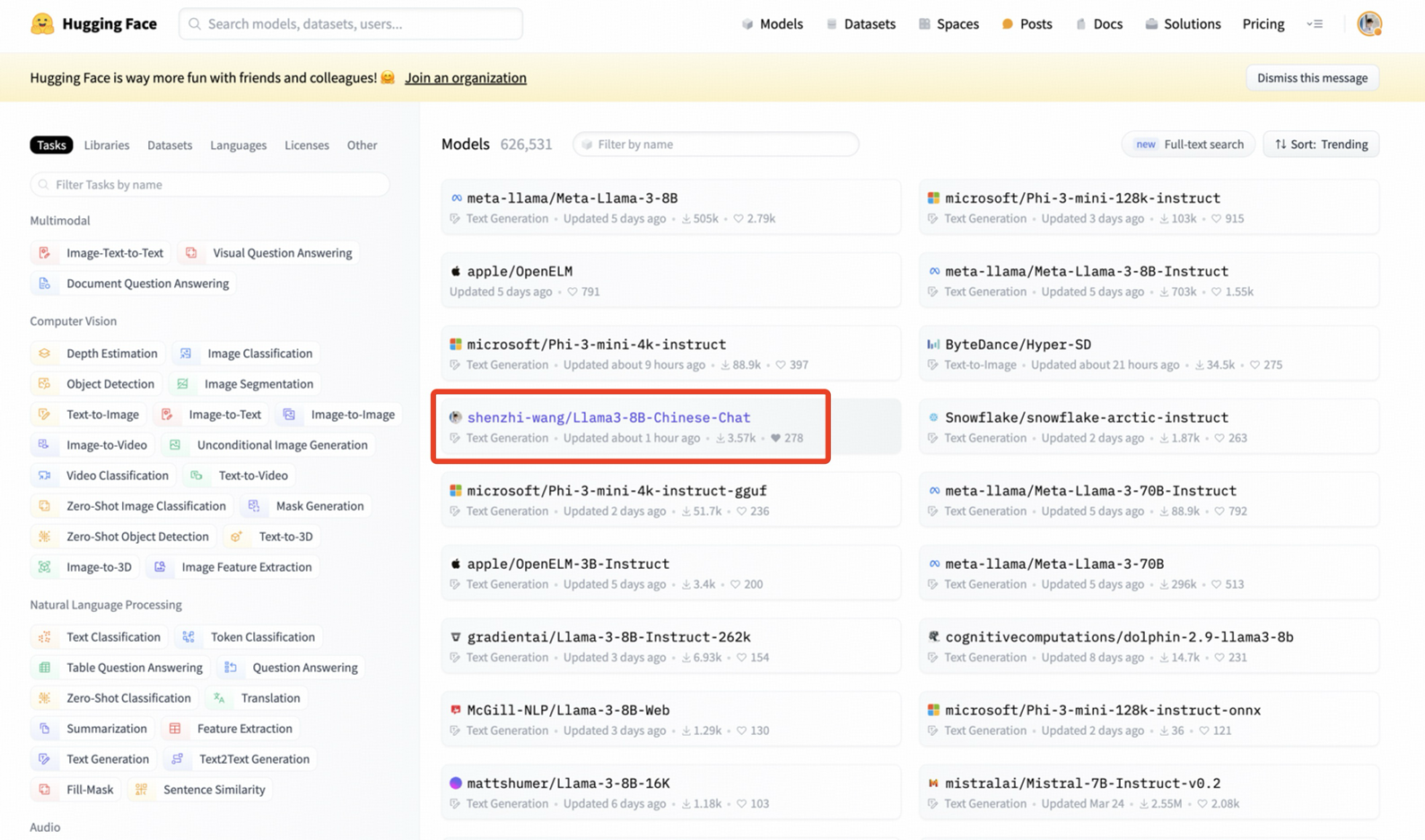
My research has received citations. The Flexibility Trap received the 🏆 ICML 2026 Outstanding Paper Award (2 out of 23,918 submissions), while Beyond the 80/20 Rule and Absolute Zero rank among the top 5 and top 25 most-cited NeurIPS 2025 papers, respectively. My publications include 3 Oral and 2 Spotlight papers. I have also open-sourced Llama3-Chinese-Chat, which has accumulated 1M+ downloads and reached Hugging Face Trending #7, and Xwen-Chat, which surpassed the then state-of-the-art DeepSeek-V3 in chat performance.

- Foundation Model Post-Training
- Reinforcement Learning
- LLMs, VLMs, and DLMs
Ph.D. in Artificial Intelligence, 2021–2027 (expected)
Department of Automation, Tsinghua University
B.Eng. in Computer Science and Technology, 2017–2021
SHENYUAN Honors College, Beihang University
News
- July 2026 — The Flexibility Trap received the 🏆 ICML 2026 Outstanding Paper Award.
- July 2026 — Kimi K3 was released and open-sourced.
- March 2026 — HopChain introduced scalable multi-hop data synthesis for generalizable vision-language reasoning.
- February 2026 — Qwen3.5 was released and open-sourced.
- November 2025 — Beyond the 80/20 Rule ranked among the top 5 most-cited NeurIPS 2025 papers.
- November 2025 — Absolute Zero ranked among the top 25 most-cited NeurIPS 2025 papers.
- July 2025 — OS Agents was selected as an ACL Oral paper.
- July 2025 — PopAlign appeared at ACL.
- April 2025 — Model Surgery appeared at NAACL.
- February 2025 — Released EasyR1, an efficient and scalable multimodal reinforcement-learning framework.
- February 2025 — Released the Xwen-Chat series, with Xwen-72B-Chat surpassing the then state-of-the-art DeepSeek-V3 in chat performance.
- February 2025 — DiveR-CT was selected as an AAAI Oral paper.
- August 2024 — ReCon appeared in Findings of ACL.
- August 2024 — PsychoGAT appeared at ACL.
- May 2024 — Released the Llama3-Chinese-Chat series, which later accumulated 1M+ downloads and reached Hugging Face Trending #7.
- December 2023 — FamO2O was selected as a NeurIPS Spotlight paper.
- November 2023 — GORL was published online in IEEE TNNLS.
- July 2023 — OAP appeared at ICML.
- October 2021 — Received the SenseTime Scholarship, awarded to 21 undergraduates nationwide.
- June 2021 — Glancing at the Patch appeared at CVPR.
Featured Work
For a complete list of publications, please see my Google Scholar profile.
 Kimi Technical Report · 2026
 Qwen · 2026
 One of the training tasks used in Qwen3.5 Multimodal RLVR · 2026
Synthesizes instance-grounded multi-hop visual reasoning data for RLVR, improving generalization across 20 of 24 benchmarks on Qwen3.5-35B-A3B and Qwen3.5-397B-A17B.
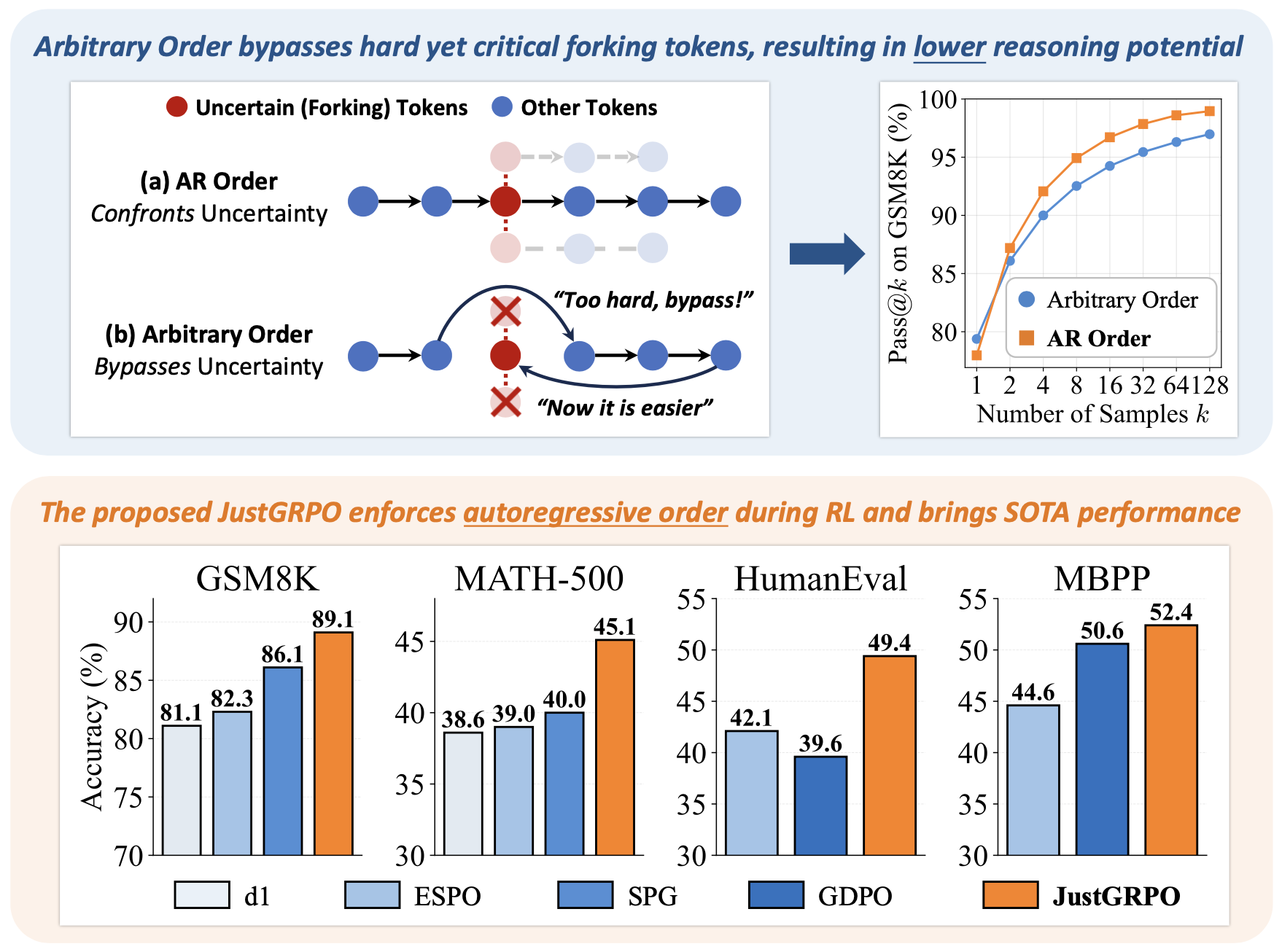
Identifies arbitrary-order generation as a bottleneck for dLLM reasoning and introduces JustGRPO, an ICML 2026 Outstanding Paper Award-winning method that preserves parallel decoding while achieving state-of-the-art results.
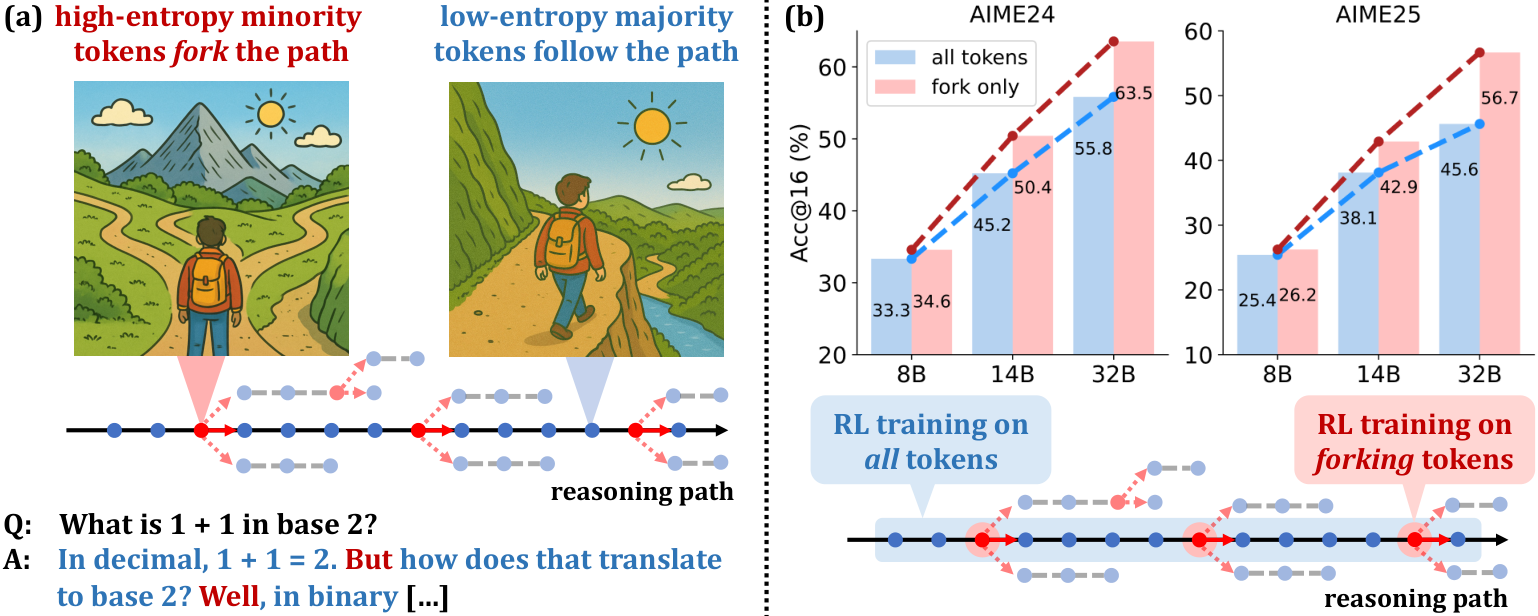 NeurIPS 2025 · Top 5 Most-Cited
Characterizes LLM chain-of-thought reasoning through a distinct token-entropy pattern: high-entropy minority tokens act as “forks” that determine reasoning directions, while low-entropy majority tokens execute reasoning steps along established paths; these critical decision points account for nearly all performance gains in RLVR, offering a new perspective on reasoning training.
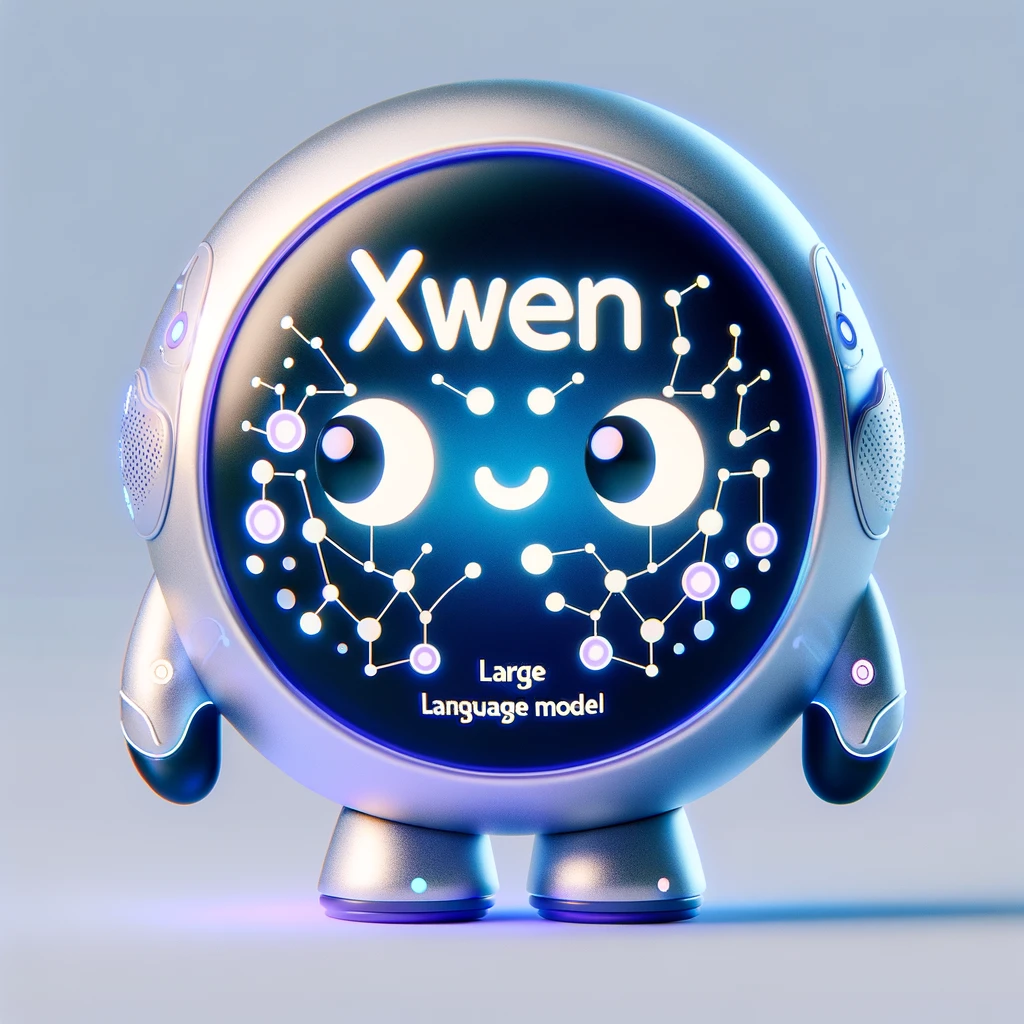 Hugging Face · 2025
Post-trains Qwen2.5 into open 7B and 72B chat models, with Xwen-72B-Chat surpassing the then state-of-the-art DeepSeek-V3 in chat performance.
 Hugging Face · 2024
Delivers bilingual Chinese-English Llama 3 chat models with stronger role-play, tool-use, and math capabilities.
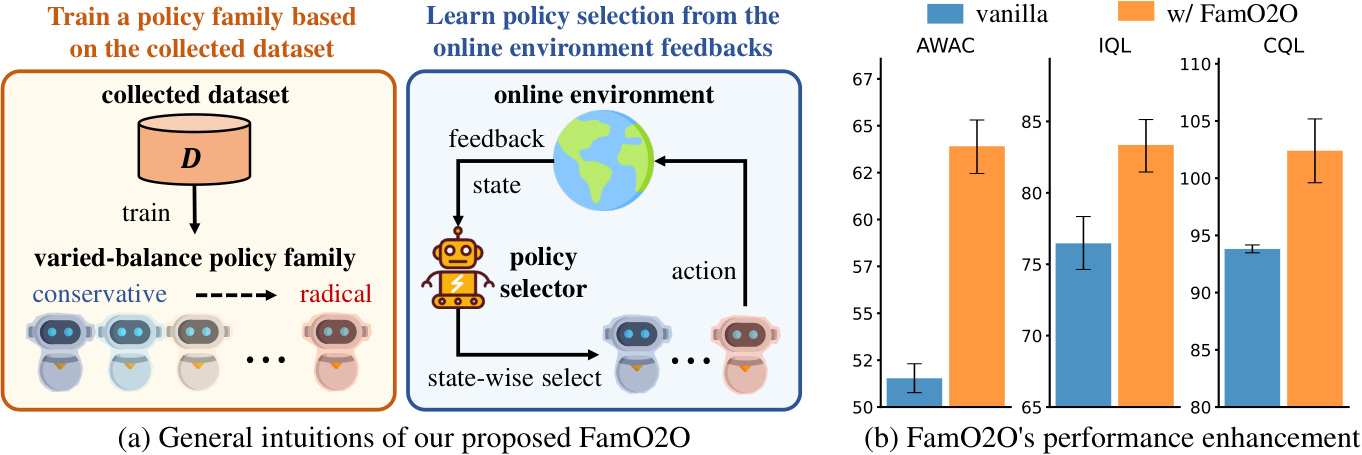 NeurIPS 2023 · Spotlight
Learns a family of policies and state-adaptively selects improvement-constraint balances, consistently improving offline-to-online reinforcement learning across standard baselines.
Academic Service & Public Impact
- Reviewer for NeurIPS, ICML, ICLR, ACL, CoRL, ICRA, etc.
- Featured in a Chinese-language Z Potentials interview about research and academic growth.
- I share technical and research content with 2k+ followers on X, 2k+ on Xiaohongshu, and 10k+ on Zhihu.
Contact
For research discussions and collaboration, please feel free to reach out by email.
- wangshenzhi99@gmail.com